The Timeless Allure of Arabic Geometric Mandala
In the world of design, few elements possess the instant gravitas and cultural depth of a well-executed Arabic Geometric Mandala. These aren't just patterns; they are visual mathematics, a harmonious blend of precision and artistry that has adorned mosques, palaces, and manuscripts for centuries. For the modern designer, entrepreneur, or crafter, integrating these motifs into a project does more than add decoration—it instills a sense of balance, sophistication, and timeless heritage that can elevate any brand or creation.
Understanding the Visual Language of Islamic Geometry
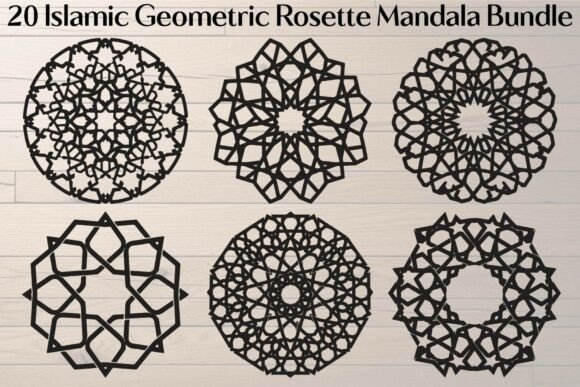
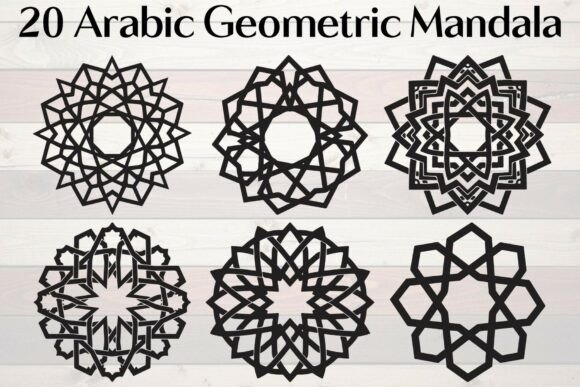
An Arabic Geometric Mandala is characterized by its intricate radial symmetry, interlocking shapes, and the use of fundamental geometric forms—circles, squares, stars, and polygons—arranged according to strict mathematical principles. The result is a pattern that feels both infinitely complex and perfectly ordered. The personality of this style is one of meditative precision and architectural elegance. Its appeal lies in its ability to command attention through complexity while simultaneously offering visual calm through perfect balance. It is a design language that speaks of knowledge, spirituality, and the universal search for order within beauty.
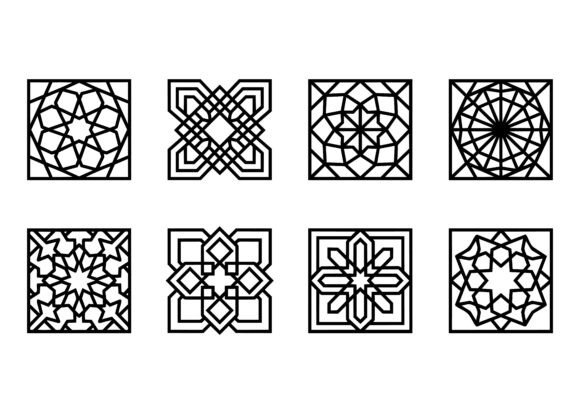
This style is far from monolithic. Within the broad category of Arabic Geometric Mandala, you'll find influences from Moorish tilework, Persian floral integrations, and the monumental stone jali screens of Mughal architecture. Some designs are stark and bold, relying on strong negative space, while others are dense and layered, creating a mesmerizing optical texture. This versatility means they can serve as a powerful display font for a logo, the foundational pattern for packaging design, or the central motif in a piece of Islamic wall art.
Practical Applications: From Digital Branding to Physical Craft
The true strength of an Arabic Geometric Mandala bundle, particularly one with scalable vector files, is its chameleon-like adaptability across mediums. In digital and print projects, these patterns form stunning backgrounds for social media graphics, website hero sections, or editorial spreads, adding depth without overwhelming typography. For brand identity, a simplified mandala can become a distinctive, culturally rich logo mark for businesses in wellness, architecture, luxury goods, or cultural sectors, communicating heritage and meticulous craftsmanship.
For makers and crafters, the applications are equally robust. The clean lines and strong silhouettes are ideal for laser cutting and CNC projects, producing intricate wooden panels, acrylic coasters, or engraved metal jewelry. In the realm of vinyl cutting, these designs translate beautifully into wall decals, stencil templates, and custom apparel. They are the perfect design assets for creating bespoke Ramadan and Eid decorations, from table centerpieces to hanging ornaments, offering a personalized touch that store-bought items cannot match. The key is recognizing that these are not just digital assets; they are blueprints for tangible, textured creations.
Integrating This Design Asset into Your Workflow
When considering an Arabic Geometric Mandala for your project, start with purpose. Ask yourself: what role will this pattern play? Is it the primary visual hierarchy element, or a subtle textural background? For a logo design, you might isolate a single star or a simplified segment of the mandala to ensure clarity at small sizes. For packaging design or tile patterns, the full, repeating composition creates a luxurious and immersive experience.
Font pairing is a critical consideration. The ornate, non-linear nature of geometric mandalas pairs best with clean, simple typefaces. A sans serif font with good readability often provides the perfect counterbalance, letting the complexity of the mandala shine without creating visual chaos. For a more traditional feel, a serif font with elegant proportions can complement the sophistication. Avoid pairing with overly decorative script fonts or handwritten fonts, as this can lead to a cluttered and illegible outcome.
Finally, always review the technical specifications of any bundle. Ensure the files (like SVG, EPS, DXF) are compatible with your software—whether it's Adobe Illustrator, CorelDRAW, Cricut Design Space, or Silhouette Studio. Test a single design in your project's scale and medium first. Check how the lines cut, engrave, or render on screen. This practical testing ensures the premium font asset you've chosen performs flawlessly, maintaining the professionalism and brand consistency your work demands. The right Arabic Geometric Mandala isn't just a design; it's a partnership between timeless artistry and modern tooling, ready to bring bold symmetry and profound cultural resonance to your next project.